

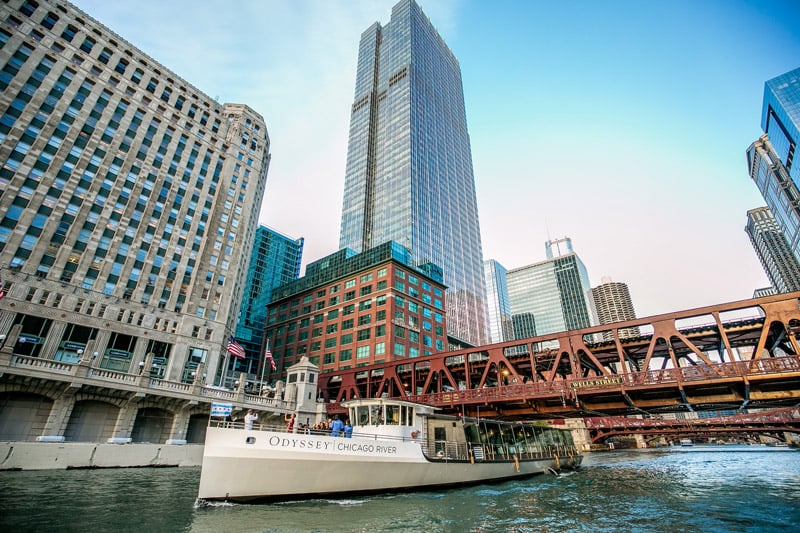
风城的历史与芝加哥河的历史深深交织在一起--整个城市都能感受到芝加哥河的气势,它对这座大都市的影响也是巨大的。在许多方面,你甚至可以说芝加哥河的历史就是这座城市本身的历史。
An excellent way to learn about the history of the Chicago-area waterway system is on a City Cruises river tour, such as the classic Seadog River & Lake Architectural Tour.
Enriching the local economy and bolstering commerce while occasionally posing significant challenges to its communities, the Chicago River system has both a natural and unnatural history, and not just when it’s dyed green for St. Patrick’s Day.
From Lake Michigan to the South Branch, here’s how the Chicago River has influencedthe Windy City over the centuries.
居住在该地区的原住民称奇加古河为 "奇加古河"。
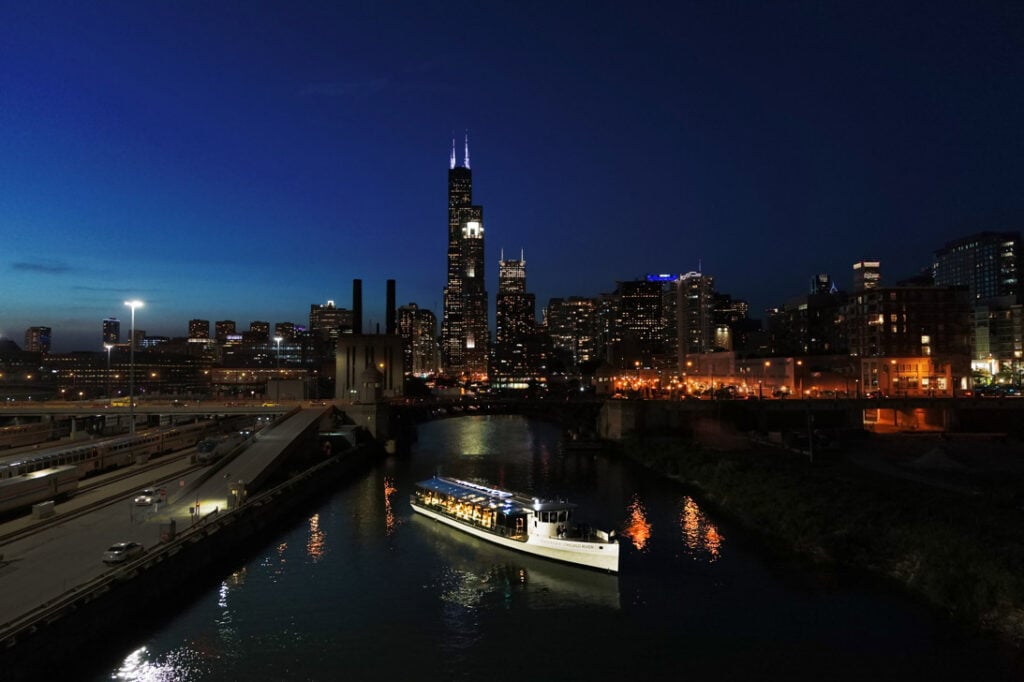 Before the onslaught of European occupation and colonization, the Chicago area was teeming with wild flora and fauna—deer, foxes, black bears, and most significantly, beavers. Beaver, in essence, was a cash cow, one that eventually fueled European colonization, as beaver fur and castoreum (an essence extracted from beavers, often used in colognes and perfumes) were much coveted in Europe.
Indigenous peoples who lived in what is now Chicago called the river Chigagou, or the “wild garlic place.” The Archaic, Upper Mississippian, and Woodland peoples (and the Potawatomi and Miami peoples who moved to the area later) were highly skilled at navigating the Chigagou’s waters, relying on it as a source of drinking water and food and a means of transportation for trading and hunting.
芝加哥市由欧洲殖民者建立
The early settlers lacked the skill of the Indigenous people whose land they took, but over time, they picked up smart techniques for navigating the river, including a shortcut that greatly reduced travel time. It wasn’t easy, though—it required carrying canoes across a few miles of muddy portage to reach the Great Lakes.
That shortcut eventually inspired European colonizers to establish a city where Chicago stands today, thanks to the ideal location for fast travel between the Mississippi River and the Great Lakes—two of North America’s key trade and transportation routes.
The 1795 Treaty of Greenville was agreed upon by the United States and a confederation of Native American tribes. As a result, the former gained ownership of a 6-mile plot of land at the mouth of the river, and essentially, the rest is history: any city founded at this hub was bound to become a commercial success.
克服芝加哥河上的障碍
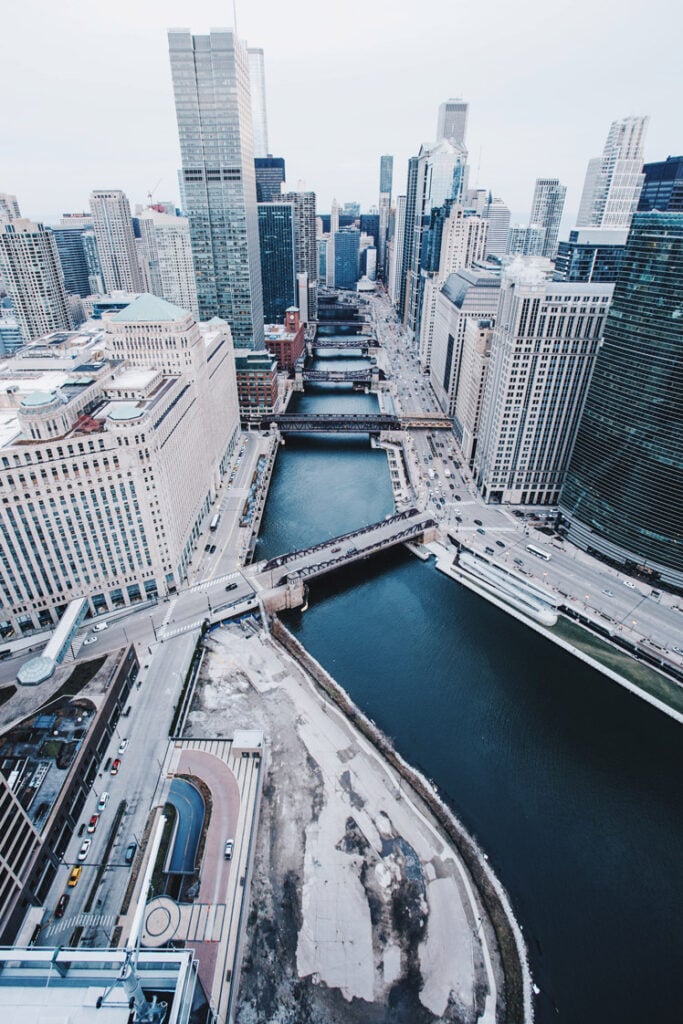 随着地理位置的传播,越来越多的人被吸引到这里,他们渴望从这条商业和交流要道上的理想位置中获益。然而,在人为操纵之前,河流在今天的密歇根大道向南偏转,因此,水手在进出港口时不得不绕过沙洲艰难航行。
对于大型船只来说,这尤其具有挑战性,甚至是不可能完成的任务,因为这些船只经常会在港口附近抛锚,然后将货物重新装载到可以绕过沙洲的小型船只上。
1816 年至 1828 年间,人们在沙洲上开凿了几条航道,但都没有成功,一再被沙子填平。1833 年,美国国会批准建造码头,并采取其他措施加固和改善港口。这项任务大体上取得了成功,大型船只终于可以轻松进出港口。
In 1836, the Illinois General Assembly commenced work on the massive Illinois and Michigan Canal that would bypass the sandbank. The construction of the 96-mile ditch took some 12 years to complete, using Irish immigrant laborers. After the completion of the canal, the United States and its position in the world would change forever.
大力改善芝加哥的主要水道
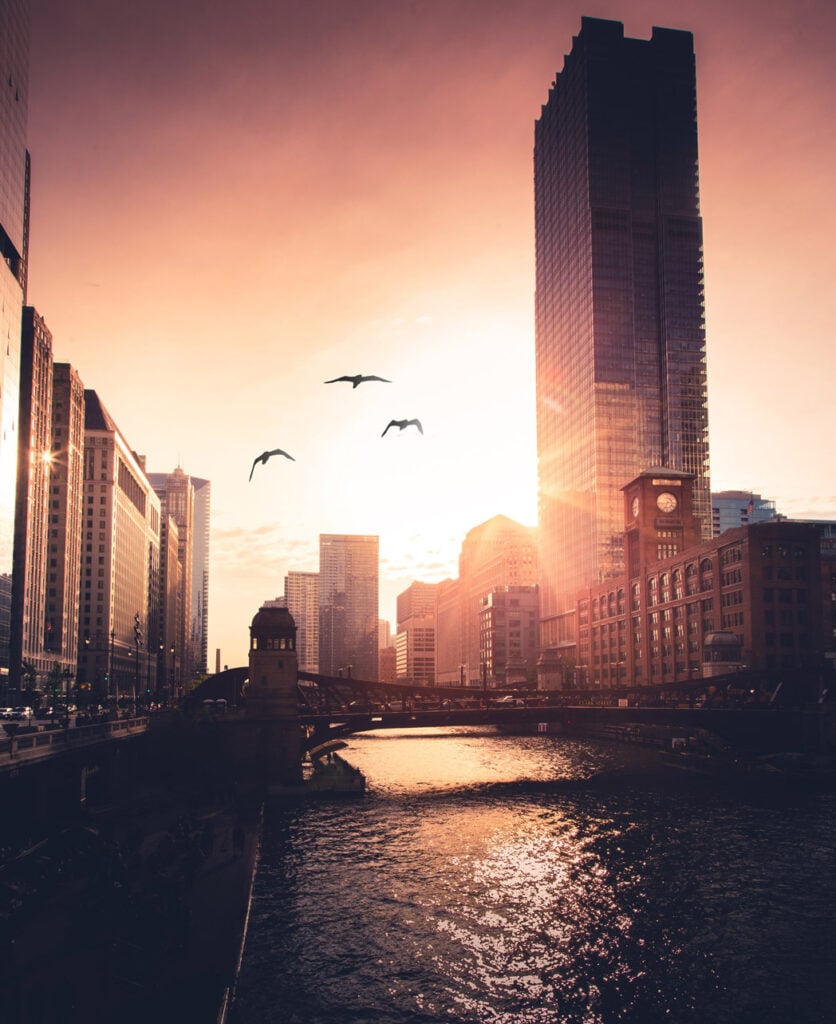 Over time, more alterations were made to the Chicago River’s harbor and landscape. An extensive sewer system was built and the city essentially rose out of the mud: the harbor was expanded, and the river dredged and widened, so its flow reversed to run west from Lake Michigan.
In 1900, the 28-mile Sanitary and Ship Canal was completed, in hopes of improving the local water quality—an effort that was thwarted by those dumping pollutants, both accidentally and knowingly, into Lake Michigan, the city’s source of drinking water. The canal successfully reversed the flow of the Chicago River, sending sewage away from Lake Michigan and toward the Mississippi River. But despite this major achievement, pollution from factories and weak environmental rules continued to harm the water for years. The project was a huge engineering success, but it also showed the ongoing struggle to balance city growth, clean water, and protecting the environment.x
1910 年,为了改善当地的饮用水质量,人们做出了更多的尝试,修建了 8 英里长的北岸水道和 16 英里长的卡尔萨格水道,该水道于 1922 年完工。这两项工程都扩大了卫生区的管辖范围,并且部分成功地将河流的水流引离了密歇根湖。1929 年,河道中一个很大的弯道被拉直,以缓解河水和火车的流量。
芝加哥现代河景
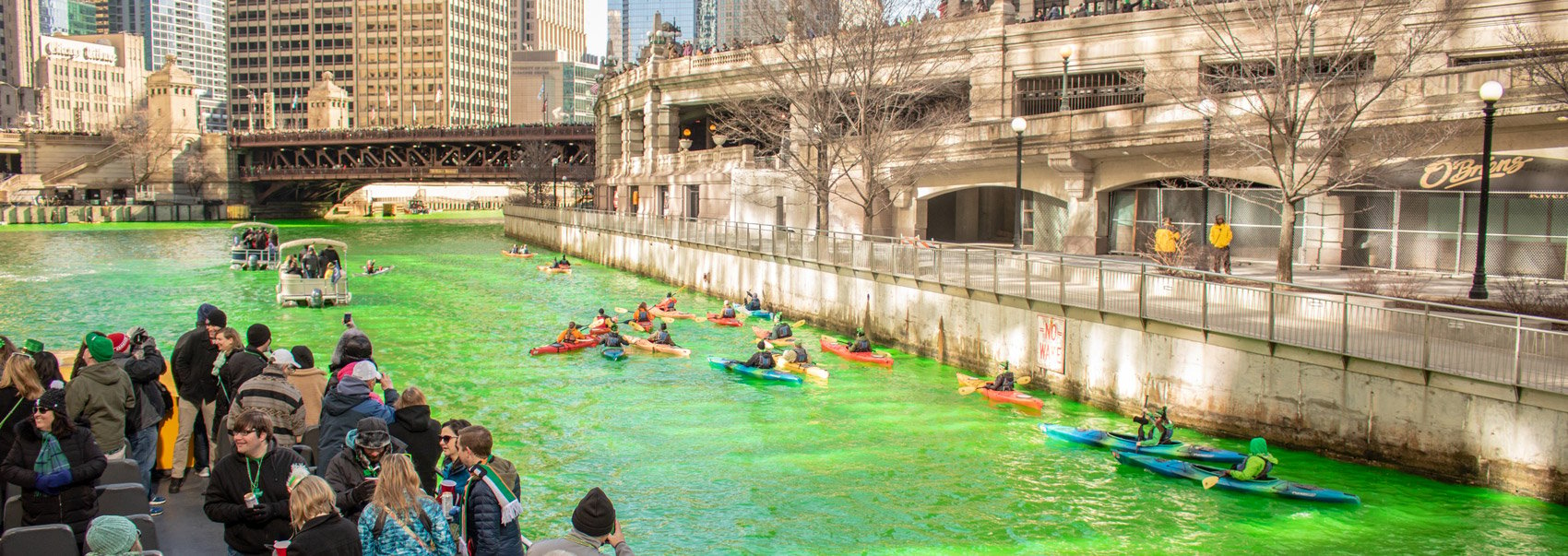
近年来,芝加哥人一直在倡导并采取措施,以更加尊重的方式对待这条河流,尽管在圣帕特里克节游行时将其染成绿色的传统依然存在,并将在 2022 年迎来其 60 周年纪念日。
It’s still not a source of drinking water—you don’t even want to swim in it, really—but deindustrialization in the mid-20th century helped with environmental issues contributing to the poor water quality, and it’s seen some improvements.
特别是自 2001 年芝加哥河道开始建设以来,许多企业和餐馆都在河岸开店。这条多用途道路的最后一段于 2016 年开放,如今这条广受欢迎的滨水路沿河和瓦克大道向西延伸,从密歇根湖一直延伸到湖街。
The Chicago River was once known as a vital transportation route for trade and commerce, and played a crucial role in the city’s early growth and industrialization. Explore the history of the Chicago River with City Cruises, offering a unique perspective on the city’s architectural evolution. As you glide along the water, you’ll uncover fascinating stories about the river’s pivotal role in Chicago’s development and transformation. Consider enjoying the beauty of the Chicago River on a Premier Plus Dinner Cruise. Indulge in an exquisite evening of gourmet dining, dazzling skyline views, and unparalleled entertainment on a Premier Plus Chicago Dinner Cruise. Enjoy a decadent plated dinner and craft cocktails that will delight your palate while captivating panoramas of Chicago’s iconic architecture in a luxurious, glass-enclosed vessel. Take in the city from a Sights & Sips Cocktail Cruise and revel in striking views of the Chicago architecture. No matter the occasion, this cocktail cruise is perfect for friends and family looking to escape routine and enjoy a relaxing afternoon on the water.
原发布日期: 2022 年 10 月 26 日2022 年 10 月 26 日