

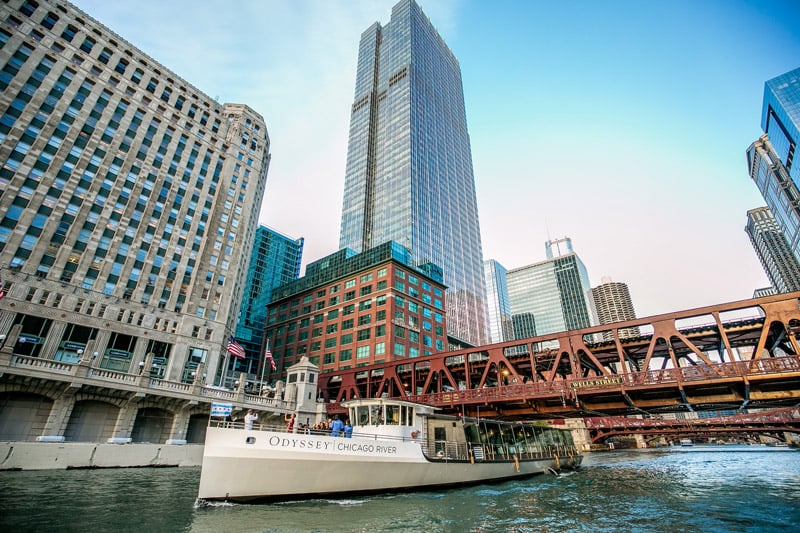
Die Geschichte der Windy City ist eng mit der Geschichte des Chicago River verwoben - die imposante Präsenz des Flusses ist überall in der Stadt zu spüren, und sein Einfluss auf die Metropole war immens. In vielerlei Hinsicht könnte man sogar sagen, dass die Geschichte des Chicago River die Geschichte der Stadt selbst ist.
An excellent way to learn about the history of the Chicago-area waterway system is on a City Cruises river tour, such as the classic Seadog River & Lake Architectural Tour.
Enriching the local economy and bolstering commerce while occasionally posing significant challenges to its communities, the Chicago River system has both a natural and unnatural history, and not just when it’s dyed green for St. Patrick’s Day.
From Lake Michigan to the South Branch, here’s how the Chicago River has influencedthe Windy City over the centuries.
Die indigenen Völker, die in diesem Gebiet lebten, nannten den Fluss Chigagou
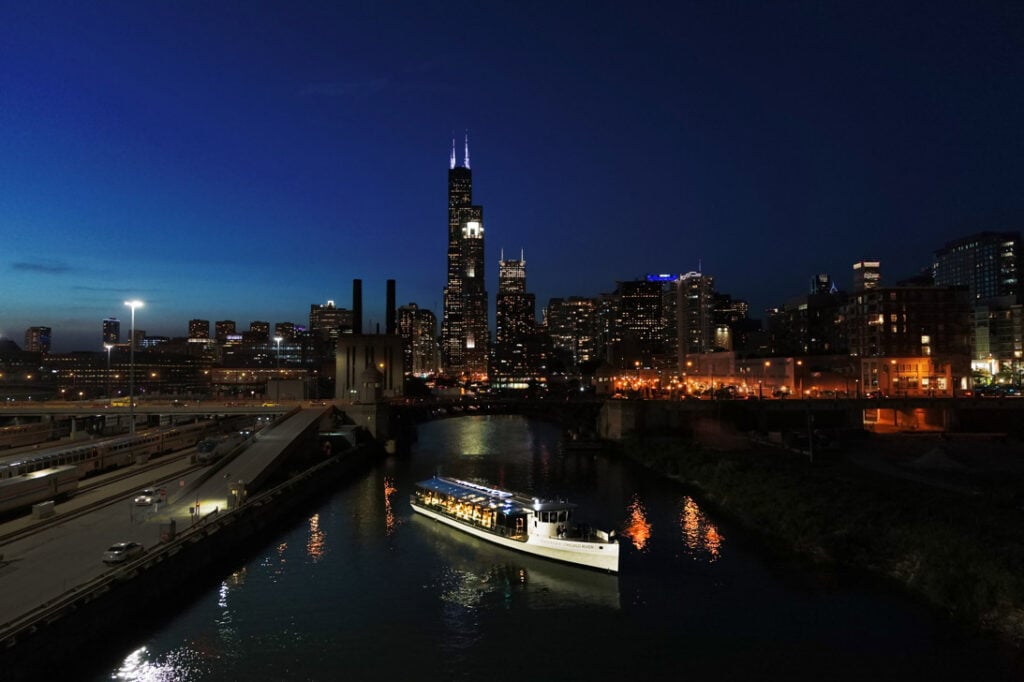 Before the onslaught of European occupation and colonization, the Chicago area was teeming with wild flora and fauna—deer, foxes, black bears, and most significantly, beavers. Beaver, in essence, was a cash cow, one that eventually fueled European colonization, as beaver fur and castoreum (an essence extracted from beavers, often used in colognes and perfumes) were much coveted in Europe.
Indigenous peoples who lived in what is now Chicago called the river Chigagou, or the “wild garlic place.” The Archaic, Upper Mississippian, and Woodland peoples (and the Potawatomi and Miami peoples who moved to the area later) were highly skilled at navigating the Chigagou’s waters, relying on it as a source of drinking water and food and a means of transportation for trading and hunting.
Die Stadt Chicago wurde von europäischen Kolonisatoren gegründet
The early settlers lacked the skill of the Indigenous people whose land they took, but over time, they picked up smart techniques for navigating the river, including a shortcut that greatly reduced travel time. It wasn’t easy, though—it required carrying canoes across a few miles of muddy portage to reach the Great Lakes.
That shortcut eventually inspired European colonizers to establish a city where Chicago stands today, thanks to the ideal location for fast travel between the Mississippi River and the Great Lakes—two of North America’s key trade and transportation routes.
The 1795 Treaty of Greenville was agreed upon by the United States and a confederation of Native American tribes. As a result, the former gained ownership of a 6-mile plot of land at the mouth of the river, and essentially, the rest is history: any city founded at this hub was bound to become a commercial success.
Überwindung von Hindernissen auf dem Chicago River
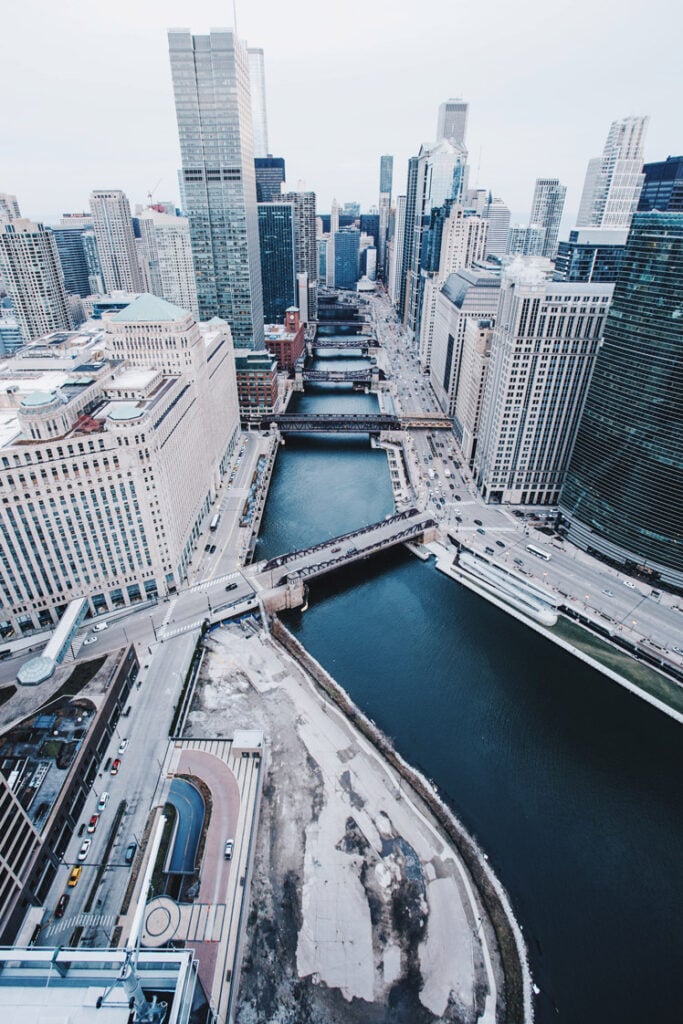 Als sich die Lage des Ortes herumsprach, zog es immer mehr Menschen in die Gegend, die die Vorteile der idealen Lage an einer wichtigen Handels- und Austauschroute nutzen wollten. Bevor der Mensch jedoch den Fluss an der heutigen Michigan Avenue nach Süden lenkte, mussten die Seeleute beim Ein- und Auslaufen aus dem Hafen mühsam eine Sandbank umfahren.
Besonders schwierig, wenn nicht gar unmöglich, war es für größere Schiffe, die oft kurz vor dem Hafen ankerten und ihre Waren auf kleinere Schiffe umluden, die es um die Sandbank herum schafften, so dass die Behörden Pläne ausheckten, um Abhilfe zu schaffen.
Zwischen 1816 und 1828 wurden mehrere Kanäle durch die Sandbank gegraben, die jedoch nicht erfolgreich waren und immer wieder mit Sand aufgefüllt wurden. 1833 gab der Kongress der Vereinigten Staaten dann grünes Licht für den Bau von Molen und andere Maßnahmen zur Verstärkung und Verbesserung des Hafens. Diese Maßnahme war im Großen und Ganzen erfolgreich, und größere Schiffe konnten endlich ohne Schwierigkeiten in den Hafen ein- und auslaufen.
In 1836, the Illinois General Assembly commenced work on the massive Illinois and Michigan Canal that would bypass the sandbank. The construction of the 96-mile ditch took some 12 years to complete, using Irish immigrant laborers. After the completion of the canal, the United States and its position in the world would change forever.
Wichtige Verbesserungen an Chicagos wichtigsten Wasserstraßen
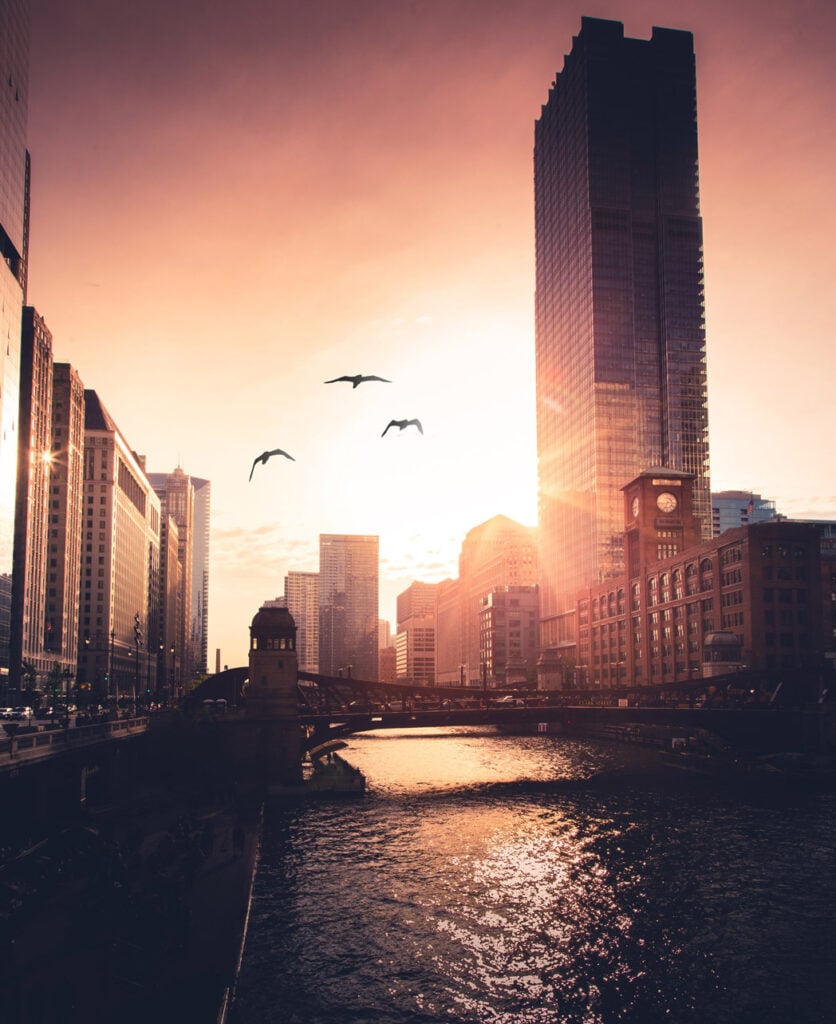 Over time, more alterations were made to the Chicago River’s harbor and landscape. An extensive sewer system was built and the city essentially rose out of the mud: the harbor was expanded, and the river dredged and widened, so its flow reversed to run west from Lake Michigan.
In 1900, the 28-mile Sanitary and Ship Canal was completed, in hopes of improving the local water quality—an effort that was thwarted by those dumping pollutants, both accidentally and knowingly, into Lake Michigan, the city’s source of drinking water. The canal successfully reversed the flow of the Chicago River, sending sewage away from Lake Michigan and toward the Mississippi River. But despite this major achievement, pollution from factories and weak environmental rules continued to harm the water for years. The project was a huge engineering success, but it also showed the ongoing struggle to balance city growth, clean water, and protecting the environment.x
Weitere Versuche zur Verbesserung der örtlichen Trinkwasserqualität wurden 1910 mit dem Bau des 8 Meilen langen North Shore Channel und des 16 Meilen langen Cal-Sag Channel unternommen, der 1922 fertiggestellt wurde. Beide Maßnahmen erweiterten den Zuständigkeitsbereich des Sanitary District, und die Projekte waren teilweise erfolgreich bei der Umleitung des Flusses vom Michigansee weg. Im Jahr 1929 wurde eine sehr große Flussbiegung begradigt, um den Fluss- und Zugverkehr zu erleichtern.
Chicagos Flusslandschaft in der Neuzeit
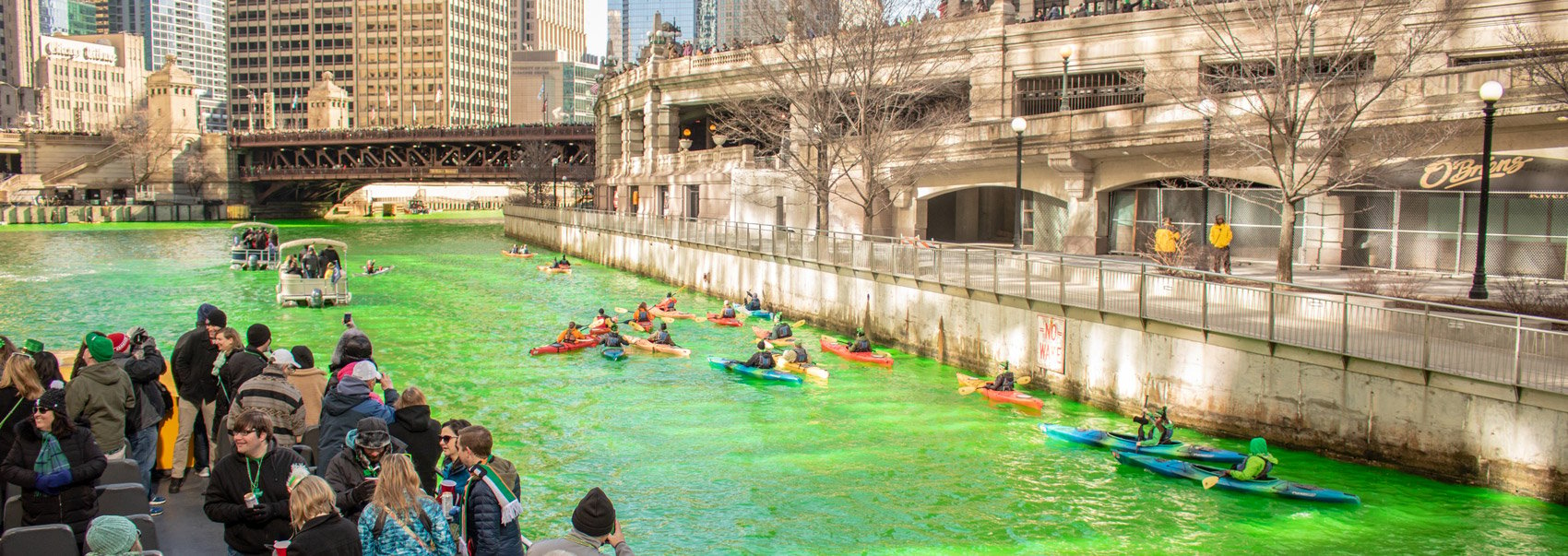
In den letzten Jahren haben sich die Chicagoer für einen respektvolleren Umgang mit dem Fluss eingesetzt und entsprechende Maßnahmen ergriffen. Die Tradition, den Fluss für die St. Patrick's Day-Parade grün zu färben, wird jedoch beibehalten und feiert im Jahr 2022 ihr 60-jähriges Jubiläum.
It’s still not a source of drinking water—you don’t even want to swim in it, really—but deindustrialization in the mid-20th century helped with environmental issues contributing to the poor water quality, and it’s seen some improvements.
Viele Unternehmen und Restaurants haben sich am Flussufer angesiedelt, insbesondere seit 2001 mit dem Bau des Chicago Riverwalk begonnen wurde. Das letzte Teilstück des Mehrzweckweges wurde 2016 eröffnet. Heute verläuft der beliebte Uferweg in westlicher Richtung entlang des Flusses und des Wacker Drive, vom Lake Michigan bis zur Lake Street.
The Chicago River was once known as a vital transportation route for trade and commerce, and played a crucial role in the city’s early growth and industrialization. Explore the history of the Chicago River with City Cruises, offering a unique perspective on the city’s architectural evolution. As you glide along the water, you’ll uncover fascinating stories about the river’s pivotal role in Chicago’s development and transformation. Consider enjoying the beauty of the Chicago River on a Premier Plus Dinner Cruise. Indulge in an exquisite evening of gourmet dining, dazzling skyline views, and unparalleled entertainment on a Premier Plus Chicago Dinner Cruise. Enjoy a decadent plated dinner and craft cocktails that will delight your palate while captivating panoramas of Chicago’s iconic architecture in a luxurious, glass-enclosed vessel. Take in the city from a Sights & Sips Cocktail Cruise and revel in striking views of the Chicago architecture. No matter the occasion, this cocktail cruise is perfect for friends and family looking to escape routine and enjoy a relaxing afternoon on the water.
Original Post Date: Oktober 26, 2022