


Springtime in Washington, DC, means one thing: Cherry Blossoms. Signaling the start of warm weather and dubbed the nation’s greatest springtime celebration, the capital hosts the National Cherry Blossom Festival annually. More than 1.5 million people gather to enjoy cultural and art programming provided through NCBF during this scenic time.
City Cruises is delighted to be a sponsor at the 2026 National Cherry Blossom Festival, which will run from March 20th to April 12th and include tons of fun events for you to enjoy during this joyous, time-honored tradition.
Ci sono molte opportunità per ammirare la splendida fioritura dei ciliegi evitando la folla e l'afflusso di turisti. Un modo è venire a bordo con noi! Offriamo una varietà di crociere durante la stagione della fioritura dei ciliegi, in cui potrete godervi il paesaggio mozzafiato e i festeggiamenti con i vostri cari e amici.
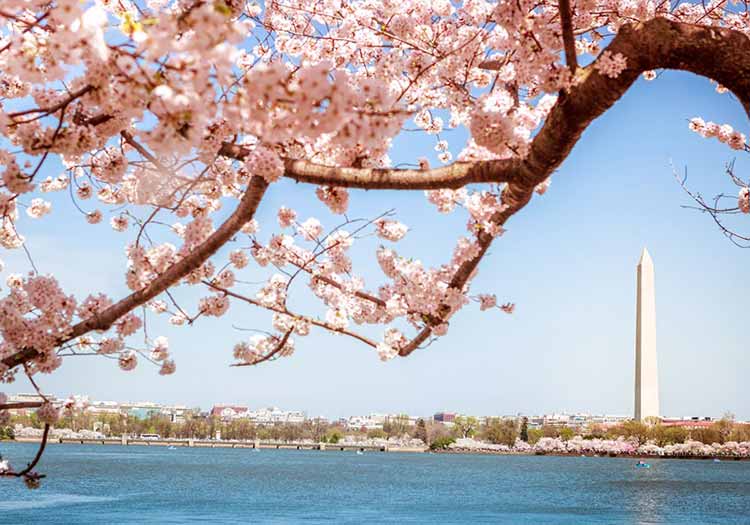
One of our favorites is the Cherry Blossom Premier Brunch Cruise. Treat yourself to a historical tour of Washington, DC, while observing some of the most iconic landmarks in the country, like Old Town Alexandria, the National Harbor, and the Washington Monument. These sites provide a stunning cherry blossom backdrop for Instagram-worthy posts. Sit back, relax, and enjoy a cocktail or mimosa while cruising all of DC’s amazing sights.
What to Do During the 2026 National Cherry Blossom Festival
The National Cherry Blossom Festival this year kicks off on Saturday, March 21st, with its signature Opening Ceremony — a tribute to the longstanding friendship between the United States and Japan, and features artists with ties to both countries.
A parade will be held on Saturday, April 11, 2026, along Constitution Avenue. Onlookers will enjoy colorful helium balloons, marching bands from across the country, elaborate floats, and celebrity entertainers. These performances and celebratory music will help usher in the arrival of spring in Washington, DC.
The Blossom Kite Festival held on March 28th is a day of family fun. All ages can enjoy a day of traditional Japanese music, activities, competitions, and performances.
Celebrate spring at Petalpalooza, April 4th, with a full day of live music and activities for all. This all-day event brings art and music to multiple outdoor stages, family-friendly activities, roaming entertainers, and a cashless beverage garden along the banks of the Anacostia River. Finish the night with a spectacular National Cherry Blossom Festival Fireworks Show set to music starting at 8:30 pm.
Se siete alla ricerca di altre cose divertenti da fare nella zona mentre la città si anima per la primavera, scoprite cosa OvunqueFamiglia e come i viaggiatori in famiglia possono "Esplorare Washington, D.C., durante la stagione della fioritura dei ciliegi con questi 6 tour".
L'affascinante storia di come i fiori di ciliegio siano arrivati a Washington, DC
The capital’s first Cherry Bloom festival took place in 1935, but the seeds for it were planted decades earlier when Eliza Scidmore, the first female board member for National Geographic, visited Japan and fell in love with the beauty of cherry blossom trees. Wouldn’t it be wonderful if the nation’s capital were adorned with such beauty every Spring, she had wondered aloud. When Scidmore’s sentiment fell on deaf ears among the city’s elite, she wrote a passionate letter to Helen Taft, the wife of President Taft. The first lady, having previously lived in Japan, was familiar with the beauty of the flowering trees and embraced Scidmore’s idea. Then she set the wheels in motion. Mrs. Taft felt that not only would Cherry Blossom trees serve as a lovely beautification to the Capital, but also as a bond of America’s friendship with Japan, where the Cherry blossom is an iconic part of that country’s cultural heritage.
Soon after, Dr. Jokichi Takamine, a chemist from Japan, visited DC and offered the cherry trees to the First Lady. They arrived at their destination, but the Department of Agriculture quickly discovered that the trees were infested with harmful insects and needed to be destroyed. Japan then made a second donation, and on March 26, 1912, the new cherry tree saplings arrived and were planted along the Tidal Basin. That day, the first lady, Helen Taft, and Viscountess Chinda, wife of the Japanese Ambassador, planted two cherry saplings on what is now Independence Avenue. The First Lady presented Viscountess Chinda with a bouquet of “American Beauty” roses at the conclusion of the event. What eventually sprouted from this simple ceremony is The National Cherry Blossom Festival, which is now a treasured national tradition.
In the spirit of gift-giving, in 1952, the United States National Park Service reciprocated the gesture and shipped budwood from the same cherry tree descendants back to Japan — to help restore the original grove when parent stock for Washington’s first trees had fallen in decline in Tokyo near the Arakawa River during World War II. This symbolized the cycle of giving and friendship.
In 1954, the rededication of this lasting friendship between nations was commemorated on the 100th anniversary of the first Treaty of Peace, Amity, and Commerce, with the presentation of a 300-year-old Japanese Stone Lantern to the City of Washington. This lantern is one of two; the other remains in Ueno Park in Tokyo, Japan. The Japanese Stone Lantern weighs approximately two tons and stands eight feet high. The lighting of this lantern officially opens The National Cherry Blossom Festival every year.
Orologio con fiori di ciliegio
Cherry blossom season is one of the busiest times of the year in Washington, DC, which can make driving and parking throughout the city quite challenging. You can expect traffic to become heavier during peak bloom. Many people try to take pictures while driving slowly – often referred to as “diginecking,” and curbside drop-offs and taxis exacerbate the congestion even further. Take advantage of the Cherry Blossom Water Taxi to alleviate the headache of being stuck in a car and view the blossoms while cruising along the Potomac River.
La data media di massima fioritura dei ciliegi di Washington è in genere il 4 aprile. Tuttavia, si sta verificando prima rispetto agli anni passati. Dal 1921, in media, il picco di fioritura si è spostato a sette giorni prima. Le previsioni per quest'anno non sono ancora state determinate. Si prevede che la fioritura avverrà tra l'ultima settimana di marzo e la prima settimana di aprile. Controllate qui gli aggiornamenti e le condizioni meteorologiche.
Il National Cherry Blossom Festival di quest'anno, in collaborazione con City Cruises, è una testimonianza dei duraturi legami di amicizia tra Stati Uniti e Giappone e dello spirito di rinnovamento. Soprattutto, la stagione annuale della fioritura dei ciliegi è un'amata celebrazione della bellezza naturale. Assicuratevi di avere un posto in prima fila per questa tradizione annuale e prenotate i biglietti in anticipo!
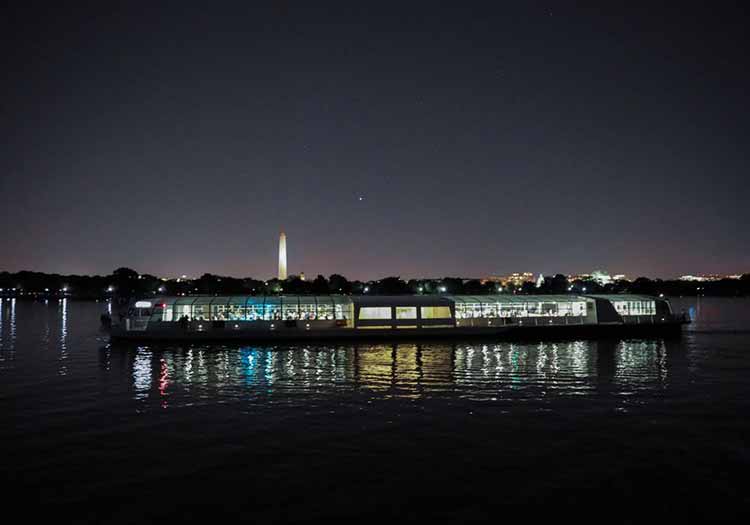
Exploring Washington, DC, and its surrounding areas by boat offers an exceptional and enjoyable experience, made even more convenient by the ease of water taxis. Take our Potomac Water Taxi, for instance. With routes connecting DC, Maryland, and Virginia, you can effortlessly and safely explore the region while cruising along the Potomac River on a narrated sightseeing tour with your personal guide. Whether you choose the Georgetown-Alexandria route, the Georgetown-Wharf route, or the Washington Monuments route, every detail is taken care of for you, ensuring a seamless and memorable adventure.
FAQs – Cherry Blossoms in Washington, DC (2026)
Quando è il momento migliore per vedere i ciliegi in fiore a Washington?
Il periodo di massima fioritura si verifica in genere tra la fine di marzo e l'inizio di aprile. Il momento esatto varia ogni anno in base alle condizioni meteorologiche. Il National Park Service fornisce previsioni annuali sulla fioritura per aiutare i visitatori a pianificare i loro viaggi.
Dove sono i luoghi migliori per ammirare i ciliegi in fiore?
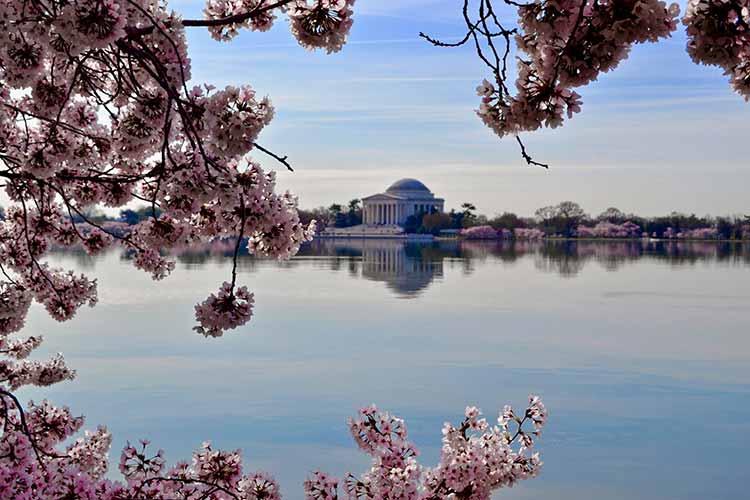
I luoghi più popolari sono il Tidal Basin, il National Mall e l'East Potomac Park. Il Tidal Basin, circondato da oltre 3.000 ciliegi, offre una vista iconica con punti di riferimento come il Jefferson Memorial sullo sfondo.
Ci sono eventi durante la stagione della fioritura dei ciliegi?
Sì! Il National Cherry Blossom Festival si tiene ogni anno e prevede una serie di eventi, tra cui il Blossom Kite Festival, la National Cherry Blossom Parade, il Petalpalooza e spettacoli culturali. Il festival dura in genere diverse settimane nel periodo di massima fioritura.
C'è un biglietto d'ingresso per vedere i ciliegi in fiore?
No, la visione dei ciliegi in fiore è gratuita. Tuttavia, alcuni eventi del festival possono avere un costo d'ingresso o richiedere dei biglietti.
Qual è il momento migliore per visitare i ciliegi in fiore?
Le prime mattine e i giorni feriali sono generalmente meno affollati e offrono un'esperienza più tranquilla. La visita all'alba o al tramonto offre una splendida illuminazione per la fotografia.
Cosa indossare per visitare i ciliegi in fiore?
Vestitevi a strati, perché il tempo primaverile a Washington può essere imprevedibile. Si consigliano scarpe comode per camminare a causa delle ampie aree da esplorare.
Gli alberi di ciliegio in fiore sono illuminati di notte?
In genere, i fiori di ciliegio non vengono illuminati di notte. Tuttavia, eventi speciali o installazioni durante la Festa nazionale dei ciliegi in fiore possono prevedere illuminazioni serali.
Posso fare un picnic sotto i ciliegi in fiore?
In alcune aree è possibile fare picnic, ma i visitatori devono evitare di danneggiare gli alberi e ripulirli. Nella maggior parte delle aree pubbliche è vietato grigliare e consumare alcolici.
Per quanto tempo i fiori di ciliegio rimangono in fiore?
Il picco di fioritura dura in genere pochi giorni, ma a seconda delle condizioni climatiche, l'intero periodo di fioritura può durare 1-2 settimane.
Data di pubblicazione originale: 14 febbraio 2023
Springtime in Washington, DC, means one thing: Cherry Blossoms. Signaling the start of warm weather and dubbed the nation’s greatest springtime celebration, the capital hosts the National Cherry Blossom Festival annually. More than 1.5 million people gather to enjoy cultural and art programming provided through NCBF during this scenic time.
City Cruises is delighted to be a sponsor at the 2026 National Cherry Blossom Festival, which will run from March 20th to April 12th and include tons of fun events for you to enjoy during this joyous, time-honored tradition.
Ci sono molte opportunità per ammirare la splendida fioritura dei ciliegi evitando la folla e l'afflusso di turisti. Un modo è venire a bordo con noi! Offriamo una varietà di crociere durante la stagione della fioritura dei ciliegi, in cui potrete godervi il paesaggio mozzafiato e i festeggiamenti con i vostri cari e amici.
One of our favorites is the Cherry Blossom Premier Brunch Cruise. Treat yourself to a historical tour of Washington, DC, while observing some of the most iconic landmarks in the country, like Old Town Alexandria, the National Harbor, and the Washington Monument. These sites provide a stunning cherry blossom backdrop for Instagram-worthy posts. Sit back, relax, and enjoy a cocktail or mimosa while cruising all of DC’s amazing sights.
What to Do During the 2026 National Cherry Blossom Festival
The National Cherry Blossom Festival this year kicks off on Saturday, March 21st, with its signature Opening Ceremony — a tribute to the longstanding friendship between the United States and Japan, and features artists with ties to both countries.
A parade will be held on Saturday, April 11, 2026, along Constitution Avenue. Onlookers will enjoy colorful helium balloons, marching bands from across the country, elaborate floats, and celebrity entertainers. These performances and celebratory music will help usher in the arrival of spring in Washington, DC.
The Blossom Kite Festival held on March 28th is a day of family fun. All ages can enjoy a day of traditional Japanese music, activities, competitions, and performances.
Celebrate spring at Petalpalooza, April 4th, with a full day of live music and activities for all. This all-day event brings art and music to multiple outdoor stages, family-friendly activities, roaming entertainers, and a cashless beverage garden along the banks of the Anacostia River. Finish the night with a spectacular National Cherry Blossom Festival Fireworks Show set to music starting at 8:30 pm.
Se siete alla ricerca di altre cose divertenti da fare nella zona mentre la città si anima per la primavera, scoprite cosa OvunqueFamiglia e come i viaggiatori in famiglia possono "Esplorare Washington, D.C., durante la stagione della fioritura dei ciliegi con questi 6 tour".
L'affascinante storia di come i fiori di ciliegio siano arrivati a Washington, DC
The capital’s first Cherry Bloom festival took place in 1935, but the seeds for it were planted decades earlier when Eliza Scidmore, the first female board member for National Geographic, visited Japan and fell in love with the beauty of cherry blossom trees. Wouldn’t it be wonderful if the nation’s capital were adorned with such beauty every Spring, she had wondered aloud. When Scidmore’s sentiment fell on deaf ears among the city’s elite, she wrote a passionate letter to Helen Taft, the wife of President Taft. The first lady, having previously lived in Japan, was familiar with the beauty of the flowering trees and embraced Scidmore’s idea. Then she set the wheels in motion. Mrs. Taft felt that not only would Cherry Blossom trees serve as a lovely beautification to the Capital, but also as a bond of America’s friendship with Japan, where the Cherry blossom is an iconic part of that country’s cultural heritage.
Soon after, Dr. Jokichi Takamine, a chemist from Japan, visited DC and offered the cherry trees to the First Lady. They arrived at their destination, but the Department of Agriculture quickly discovered that the trees were infested with harmful insects and needed to be destroyed. Japan then made a second donation, and on March 26, 1912, the new cherry tree saplings arrived and were planted along the Tidal Basin. That day, the first lady, Helen Taft, and Viscountess Chinda, wife of the Japanese Ambassador, planted two cherry saplings on what is now Independence Avenue. The First Lady presented Viscountess Chinda with a bouquet of “American Beauty” roses at the conclusion of the event. What eventually sprouted from this simple ceremony is The National Cherry Blossom Festival, which is now a treasured national tradition.
In the spirit of gift-giving, in 1952, the United States National Park Service reciprocated the gesture and shipped budwood from the same cherry tree descendants back to Japan — to help restore the original grove when parent stock for Washington’s first trees had fallen in decline in Tokyo near the Arakawa River during World War II. This symbolized the cycle of giving and friendship.
In 1954, the rededication of this lasting friendship between nations was commemorated on the 100th anniversary of the first Treaty of Peace, Amity, and Commerce, with the presentation of a 300-year-old Japanese Stone Lantern to the City of Washington. This lantern is one of two; the other remains in Ueno Park in Tokyo, Japan. The Japanese Stone Lantern weighs approximately two tons and stands eight feet high. The lighting of this lantern officially opens The National Cherry Blossom Festival every year.
Orologio con fiori di ciliegio
Cherry blossom season is one of the busiest times of the year in Washington, DC, which can make driving and parking throughout the city quite challenging. You can expect traffic to become heavier during peak bloom. Many people try to take pictures while driving slowly – often referred to as “diginecking,” and curbside drop-offs and taxis exacerbate the congestion even further. Take advantage of the Cherry Blossom Water Taxi to alleviate the headache of being stuck in a car and view the blossoms while cruising along the Potomac River.
La data media di massima fioritura dei ciliegi di Washington è in genere il 4 aprile. Tuttavia, si sta verificando prima rispetto agli anni passati. Dal 1921, in media, il picco di fioritura si è spostato a sette giorni prima. Le previsioni per quest'anno non sono ancora state determinate. Si prevede che la fioritura avverrà tra l'ultima settimana di marzo e la prima settimana di aprile. Controllate qui gli aggiornamenti e le condizioni meteorologiche.
Il National Cherry Blossom Festival di quest'anno, in collaborazione con City Cruises, è una testimonianza dei duraturi legami di amicizia tra Stati Uniti e Giappone e dello spirito di rinnovamento. Soprattutto, la stagione annuale della fioritura dei ciliegi è un'amata celebrazione della bellezza naturale. Assicuratevi di avere un posto in prima fila per questa tradizione annuale e prenotate i biglietti in anticipo!
Exploring Washington, DC, and its surrounding areas by boat offers an exceptional and enjoyable experience, made even more convenient by the ease of water taxis. Take our Potomac Water Taxi, for instance. With routes connecting DC, Maryland, and Virginia, you can effortlessly and safely explore the region while cruising along the Potomac River on a narrated sightseeing tour with your personal guide. Whether you choose the Georgetown-Alexandria route, the Georgetown-Wharf route, or the Washington Monuments route, every detail is taken care of for you, ensuring a seamless and memorable adventure.
FAQs – Cherry Blossoms in Washington, DC (2026)
Quando è il momento migliore per vedere i ciliegi in fiore a Washington?
Il periodo di massima fioritura si verifica in genere tra la fine di marzo e l'inizio di aprile. Il momento esatto varia ogni anno in base alle condizioni meteorologiche. Il National Park Service fornisce previsioni annuali sulla fioritura per aiutare i visitatori a pianificare i loro viaggi.
Dove sono i luoghi migliori per ammirare i ciliegi in fiore?
I luoghi più popolari sono il Tidal Basin, il National Mall e l'East Potomac Park. Il Tidal Basin, circondato da oltre 3.000 ciliegi, offre una vista iconica con punti di riferimento come il Jefferson Memorial sullo sfondo.
Ci sono eventi durante la stagione della fioritura dei ciliegi?
Sì! Il National Cherry Blossom Festival si tiene ogni anno e prevede una serie di eventi, tra cui il Blossom Kite Festival, la National Cherry Blossom Parade, il Petalpalooza e spettacoli culturali. Il festival dura in genere diverse settimane nel periodo di massima fioritura.
C'è un biglietto d'ingresso per vedere i ciliegi in fiore?
No, la visione dei ciliegi in fiore è gratuita. Tuttavia, alcuni eventi del festival possono avere un costo d'ingresso o richiedere dei biglietti.
Qual è il momento migliore per visitare i ciliegi in fiore?
Le prime mattine e i giorni feriali sono generalmente meno affollati e offrono un'esperienza più tranquilla. La visita all'alba o al tramonto offre una splendida illuminazione per la fotografia.
Cosa indossare per visitare i ciliegi in fiore?
Vestitevi a strati, perché il tempo primaverile a Washington può essere imprevedibile. Si consigliano scarpe comode per camminare a causa delle ampie aree da esplorare.
Gli alberi di ciliegio in fiore sono illuminati di notte?
In genere, i fiori di ciliegio non vengono illuminati di notte. Tuttavia, eventi speciali o installazioni durante la Festa nazionale dei ciliegi in fiore possono prevedere illuminazioni serali.
Posso fare un picnic sotto i ciliegi in fiore?
In alcune aree è possibile fare picnic, ma i visitatori devono evitare di danneggiare gli alberi e ripulirli. Nella maggior parte delle aree pubbliche è vietato grigliare e consumare alcolici.
Per quanto tempo i fiori di ciliegio rimangono in fiore?
Il picco di fioritura dura in genere pochi giorni, ma a seconda delle condizioni climatiche, l'intero periodo di fioritura può durare 1-2 settimane.
Data di pubblicazione originale: 14 febbraio 2023